Polished concrete in Montreal, Laval and the South Shore
Le Groupe Exclusif polishes the existing concrete of your basement, loft, shop or warehouse in Montreal, Laval and the South Shore. RBQ licence 8005-0081-14. Your existing concrete is ground in successive passes with progressively finer diamonds, densified, then polished to the sheen level you choose. No coating: the floor is the concrete.
- Matte
- Satin
- Semi-gloss
- Gloss
Warehouses · Retail · Lofts · Basements
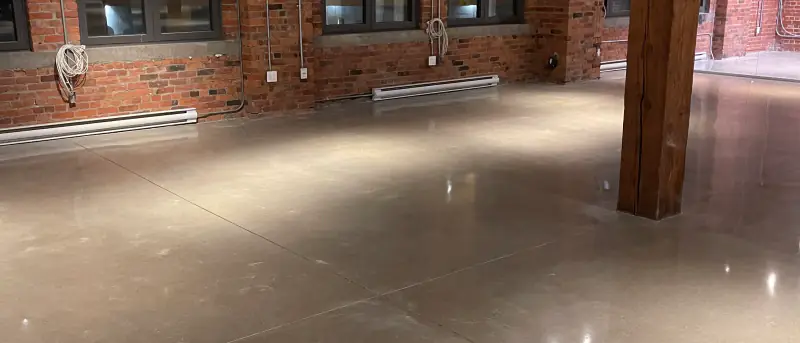
Concrete polishing: the steps
Mechanical preparation
Diamond grinding of the concrete with CNESST-compliant dust extraction.
Repairs
Cracks and imperfections filled with epoxy or polyurea.
Polishing and densifying
Successive passes with finer and finer diamonds, densifier applied, polished to the chosen sheen.
Who it’s for: basements, lofts, shops and warehouses
Residential polished concrete
Basements, lofts, slab-on-grade ground floors: when the existing concrete is in good shape, polishing it gives a durable floor with no coating to peel, and it cleans with a mop.
Commercial polished concrete
Stores, showrooms, open-plan offices: the sheen reflects the lighting and the concrete keeps its raw character. Mobilization is planned around your business hours.
Industrial polished concrete
Warehouses, plants, distribution centres: on a large slab in good condition, densified and polished concrete stands up to traffic and stops dusting. Indoor work, so it can be done all year.
Polished concrete projects
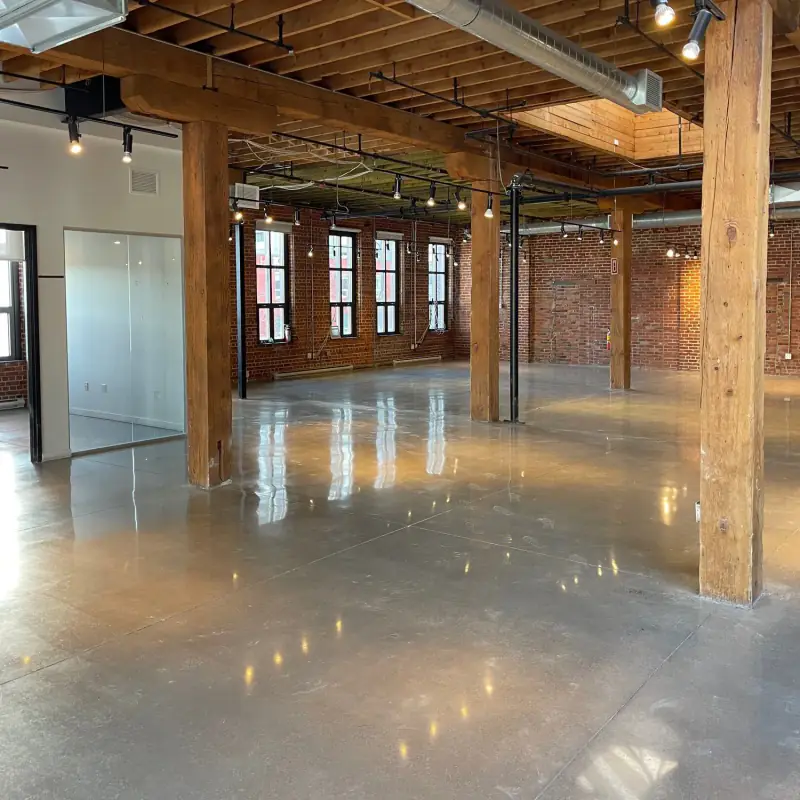
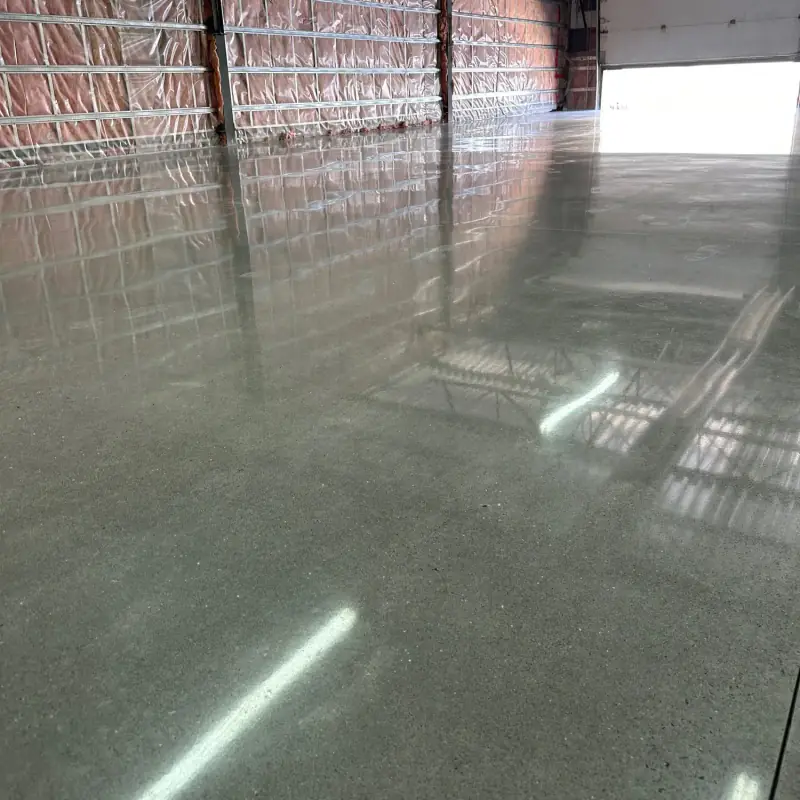
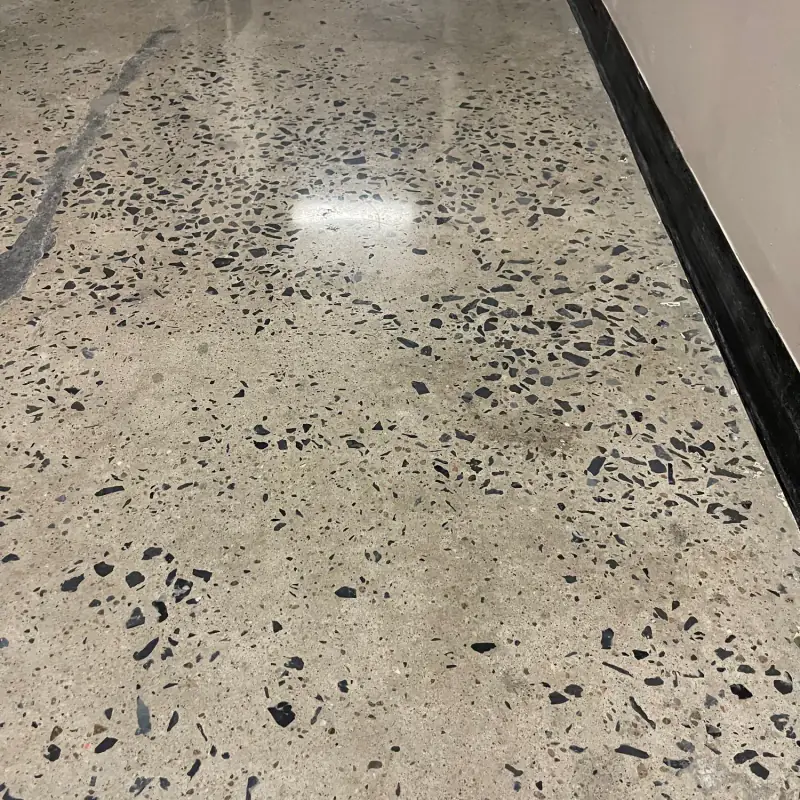
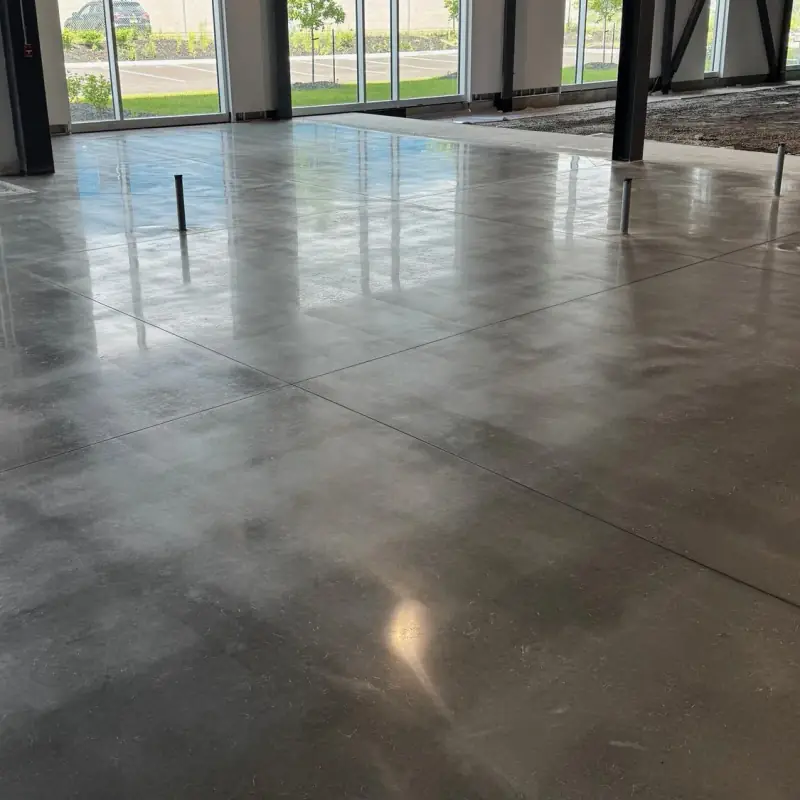
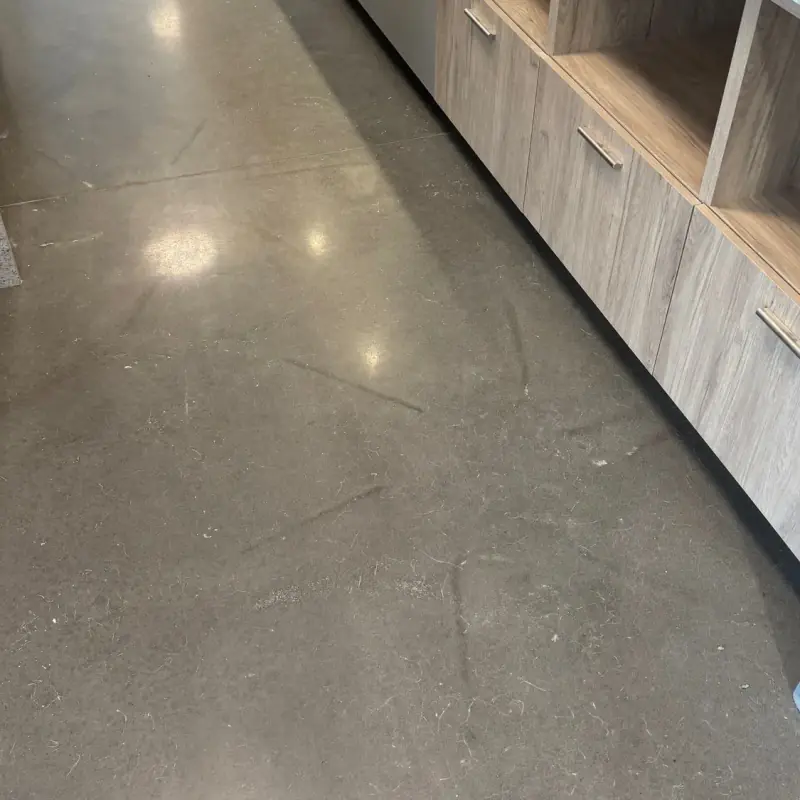
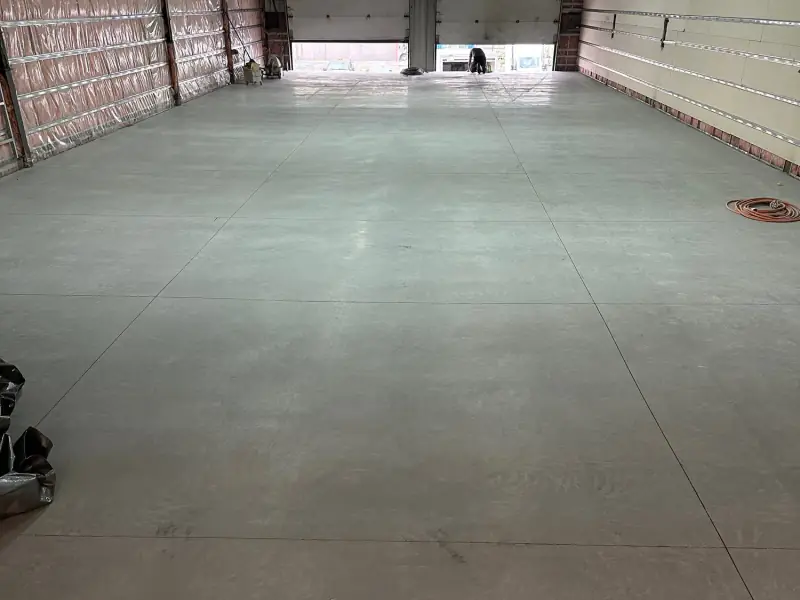
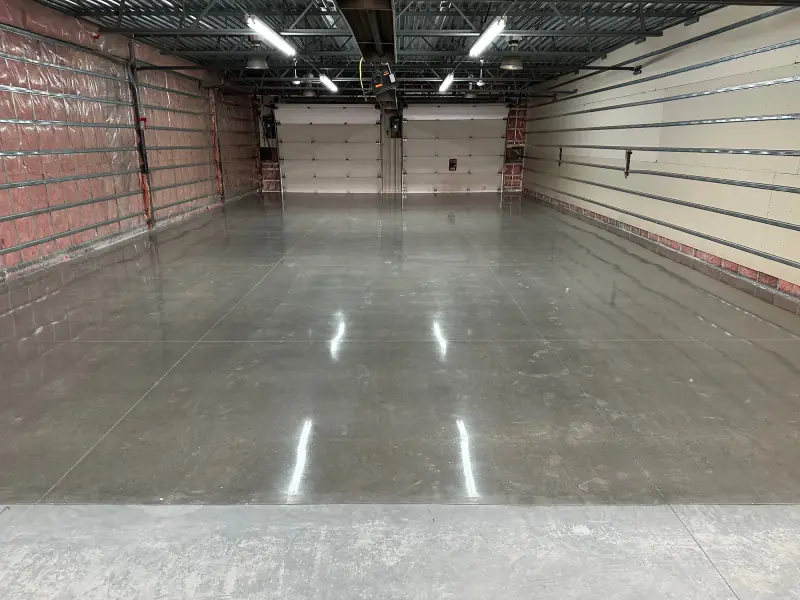
Before / after
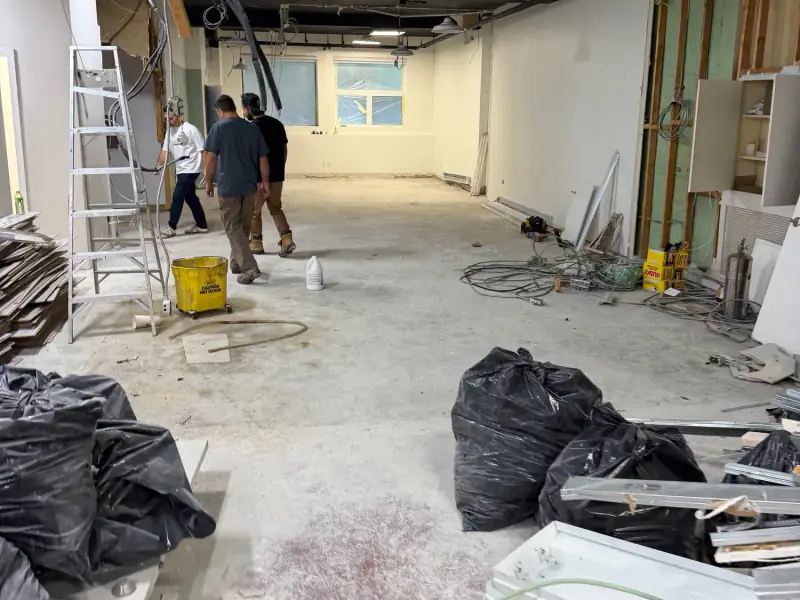
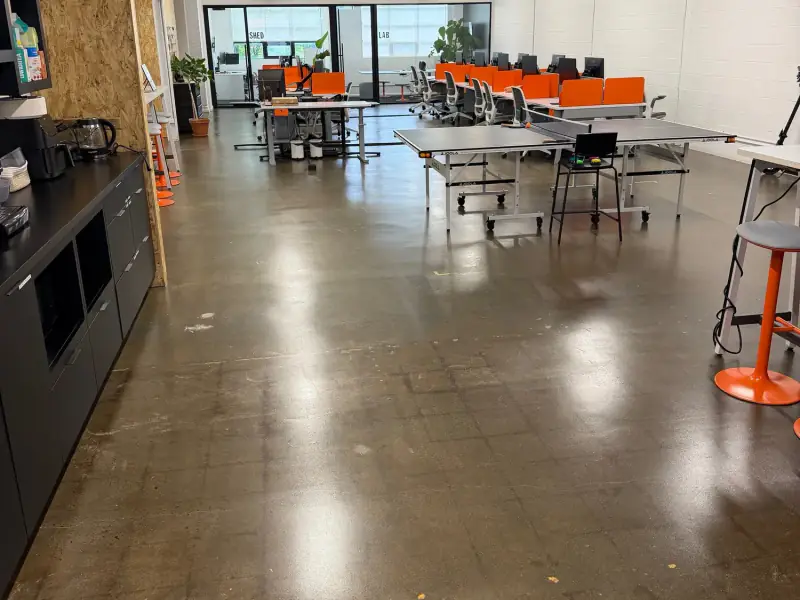
Polished concrete in a basement, after removing the old floor
Pulled up the hardwood, carpet or subfloor in your basement and found bare concrete with nails, staples or glue? That is often where a concrete floor starts. Here is what happens, in order.
We look at the slab
At the free on-site estimate, we check the concrete: cracks, low spots, a sunken or broken slab. That decides the method.
We remove what the old floor left behind
Nails, staples and glue are removed, then the slab is diamond-ground with dust extraction.
Slab in good shape: we polish it
Cracks are filled with epoxy or polyurea, then the slab is densified and polished to the sheen you choose.
Slab too damaged: a concrete topping
A new layer of concrete about 2 in. thick is poured over it, pumped down to the basement, finished with a power trowel, then sealed.
Describe your basement (square feet, what was removed) in the free estimate request · Basement epoxy · Slab replacement · Basement: polished concrete or topping
Frequently asked questions
What is polished concrete?
Your existing concrete is ground in successive passes with progressively finer diamonds, densified, then polished to the sheen you choose (matte, satin, semi-gloss or gloss). There is no coating: the floor is the concrete itself.
What is the difference between polished concrete and epoxy?
Polished concrete is the concrete itself, polished: there is no coating that can peel, and it cleans with a mop. Epoxy is a coating applied over the concrete, in flake, solid colour, metallic or marble finishes. Polished concrete suits concrete that is in good shape; if it is not, we recommend the right solution at the estimate.
What polished concrete sheens do you offer?
Four levels: matte, satin, semi-gloss and gloss. The level is chosen before polishing.
Can my concrete be polished?
Polishing needs a slab in fairly good shape, since the floor is the concrete itself. Cracks and imperfections are filled first with epoxy or polyurea. If the slab is too damaged, sunken or broken, we recommend a repair, a slab replacement or an epoxy floor instead, which covers the slab and hides its flaws.
Do you do polished concrete in Laval and on the South Shore?
Yes. Le Groupe Exclusif (RBQ licence 8005-0081-14) polishes concrete in Montreal, Laval, on the South Shore (Longueuil, Brossard, Boucherville) and in Terrebonne: basements, lofts, stores and warehouses. The estimate is free and done on site.
I removed the old floor in my basement: can the concrete be polished?
Often, yes. Nails, staples and glue are removed, the slab is diamond-ground, repaired, densified, then polished. If the slab is too damaged to polish, we pour a concrete topping about 2 in. thick, finished with a power trowel and sealed. We tell you which one fits at the free on-site estimate.
How much does it cost?
The price depends on the area, the condition of the concrete (cracks, spalling, moisture), the finish you choose and any cove base or drains. We come out for free to measure and give you a detailed written quote, with no obligation.
How does the estimate work?
Call us at (514) 659-9802 or fill in the form at the bottom of the page. We come out, measure, look at the condition of the concrete and give you a detailed written quote. The estimate is free and there is no obligation.
See also
- Basement: polished concrete or toppingThe old floor is gone and the concrete is bare: polish it or pour a topping?
- Epoxy or polished concrete?The guide to choosing between an epoxy floor and polished concrete.
- Epoxy floor costWhat drives the price of an epoxy or polished concrete floor.
- Commercial & industrialOffices, stores, parking garages, warehouses and plants.
- Concrete repairCracks, spalling and damaged slabs, repaired properly.
- Slab replacementSaw cutting, excavation and a new concrete slab poured.
- Self-leveling concreteSelf-leveling underlayment for a flat floor, before the finish.
- Basement epoxyA seamless floor over a moisture barrier, installed year-round.
- EpoxyFlake, solid colour, metallic and marble effect.
- Service areasThe island of Montreal, Laval, the South Shore and the North Shore.